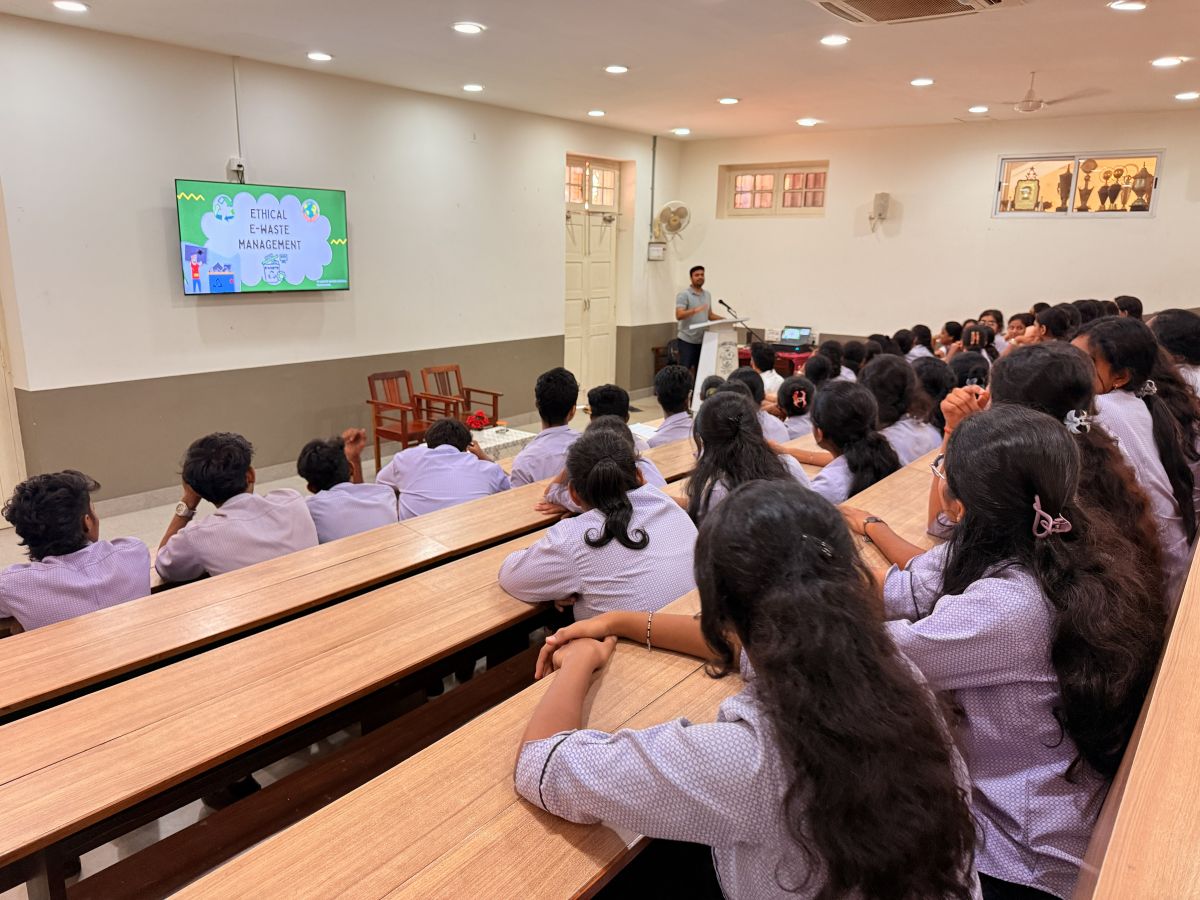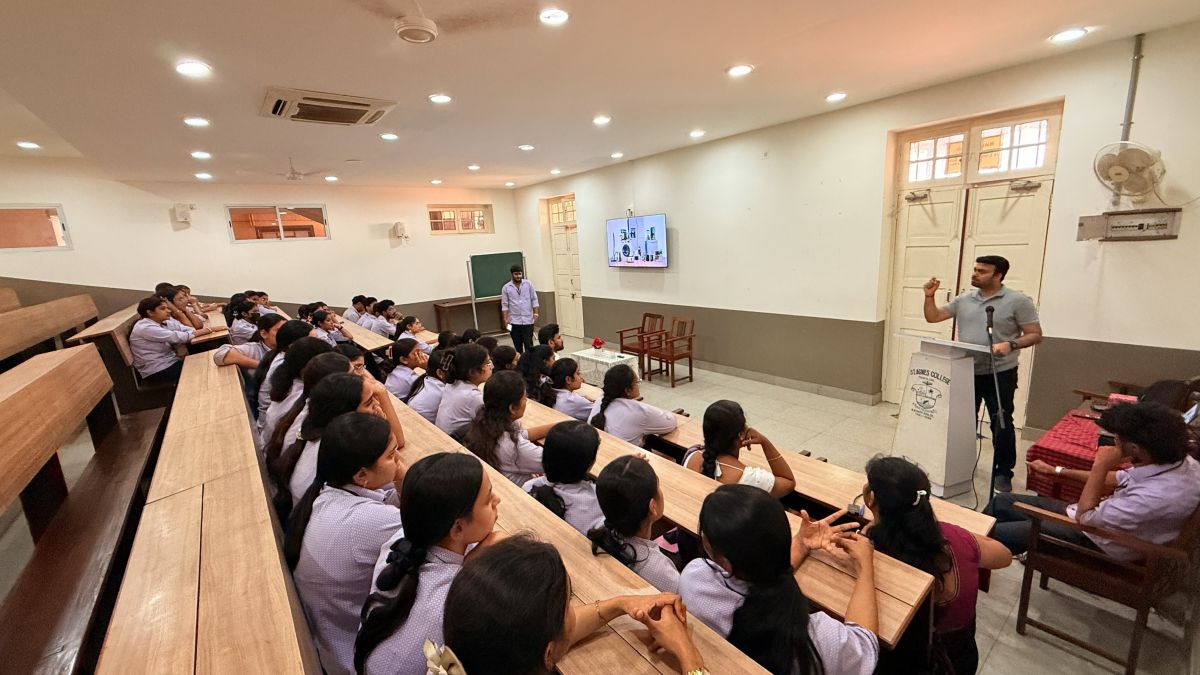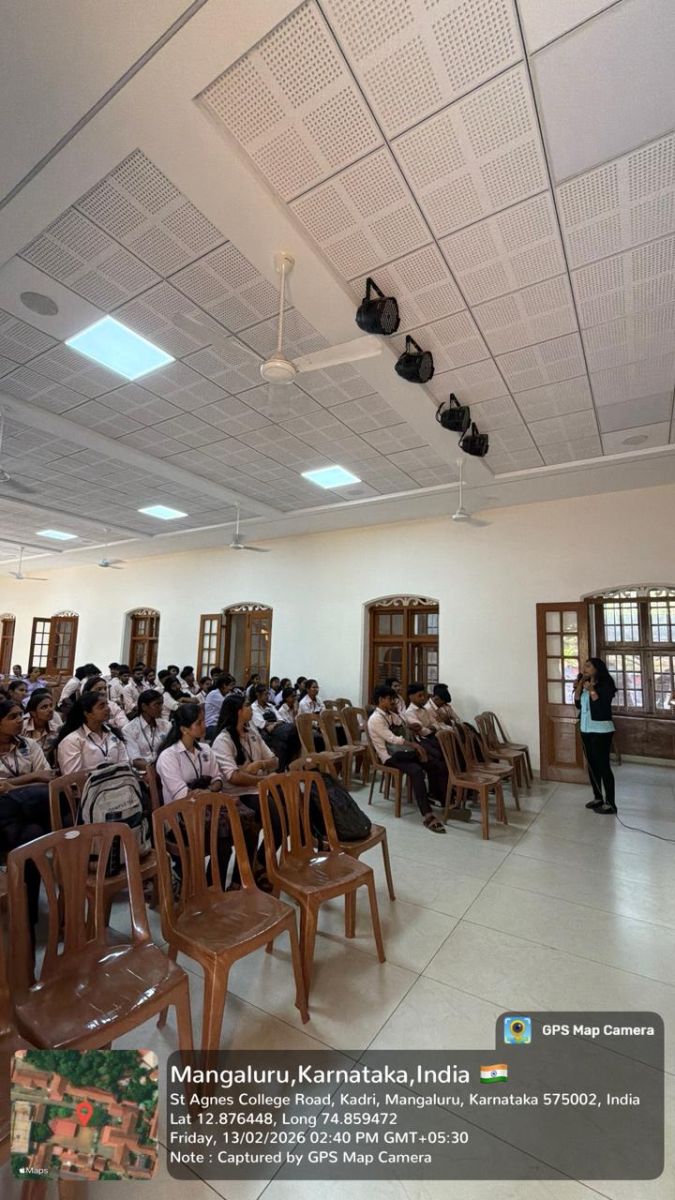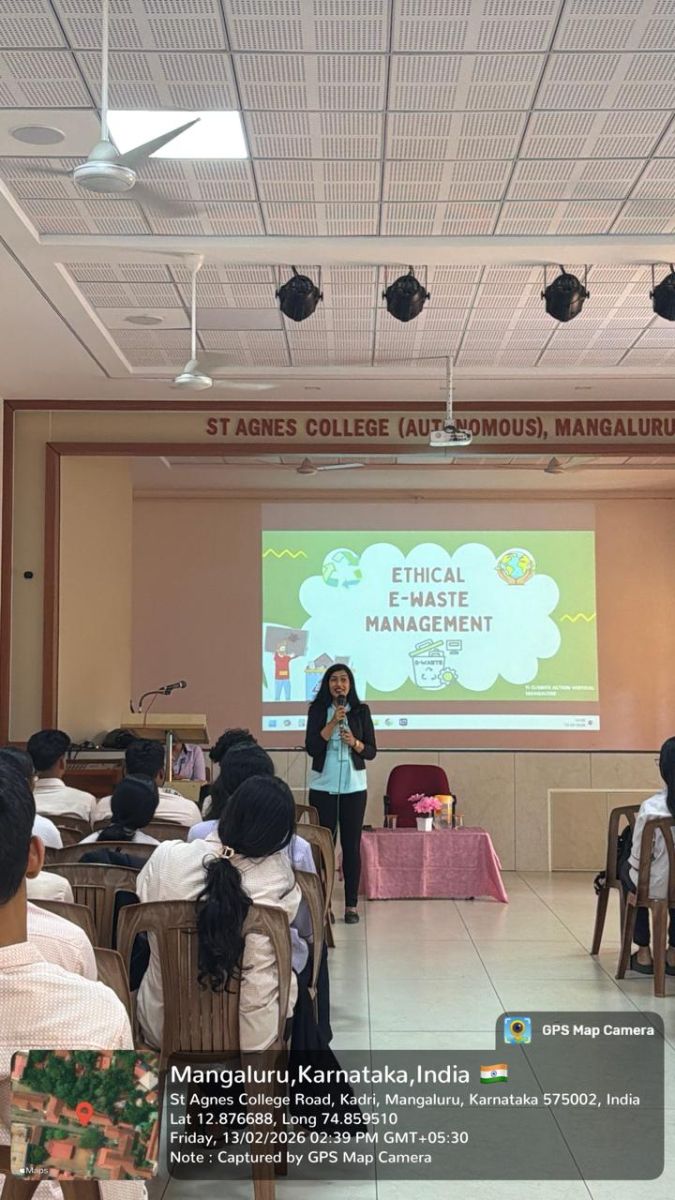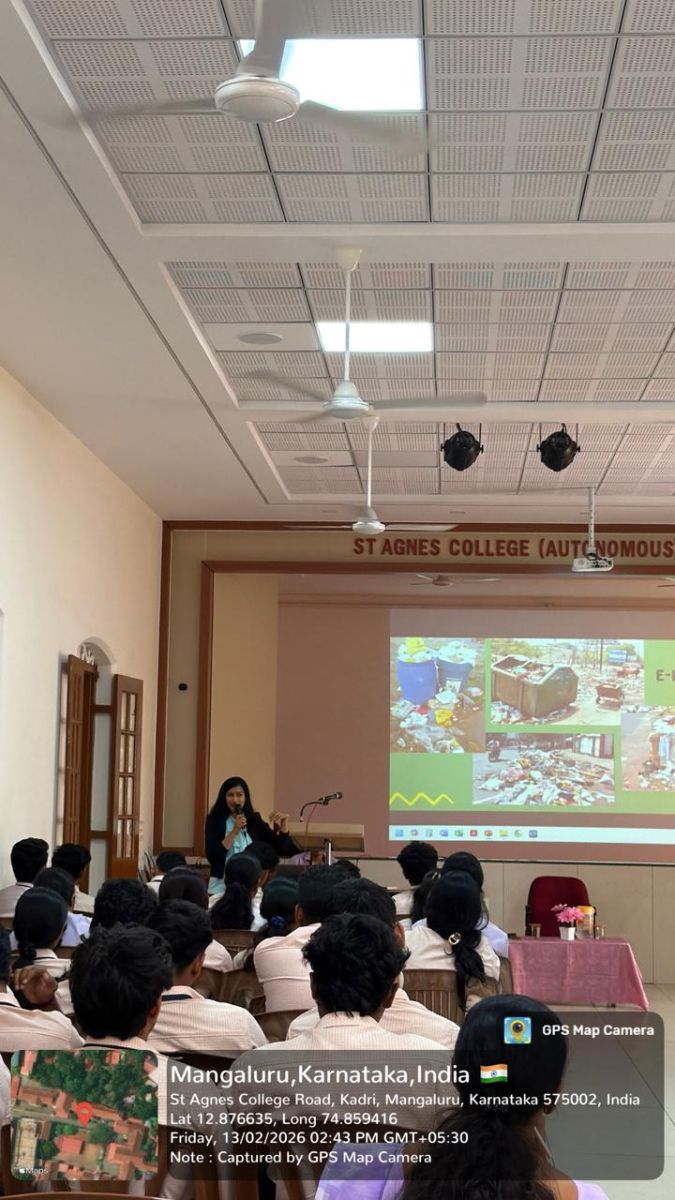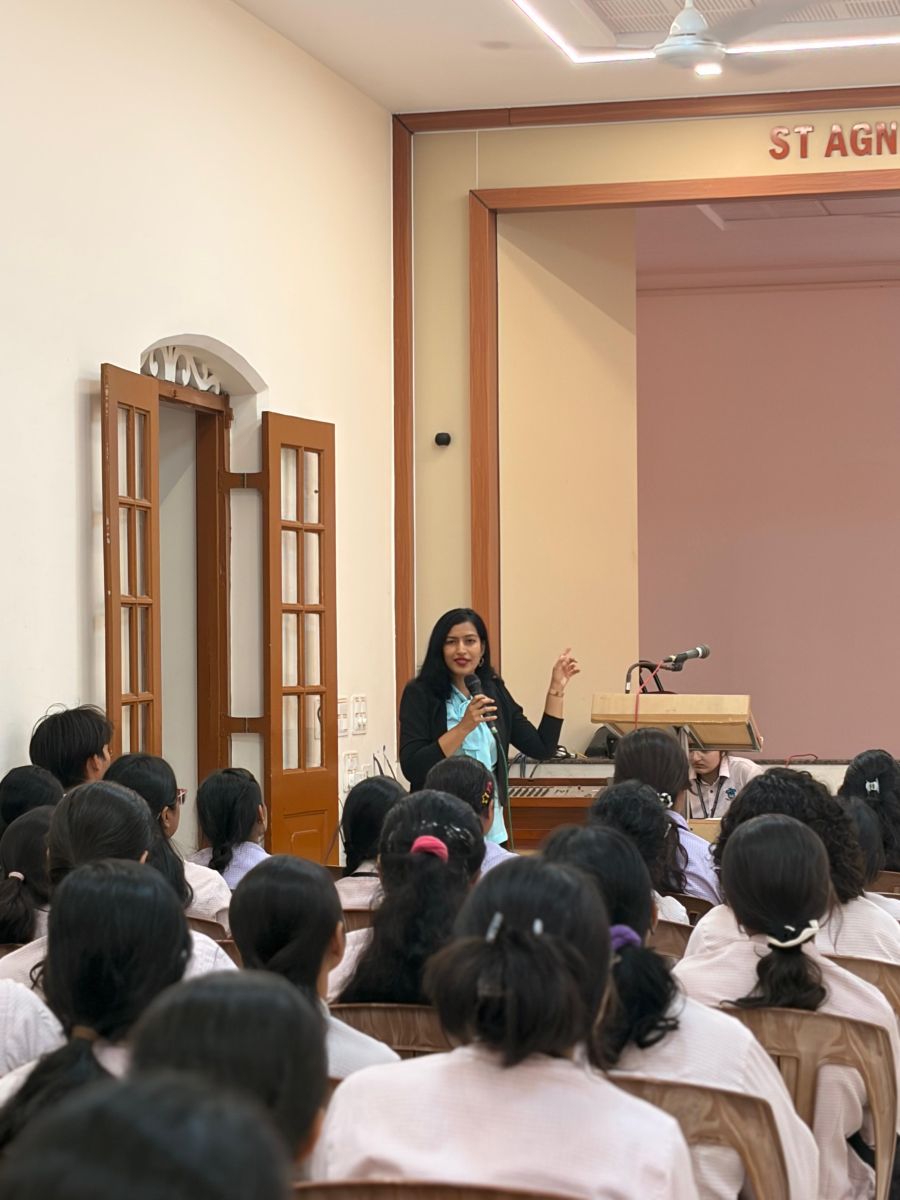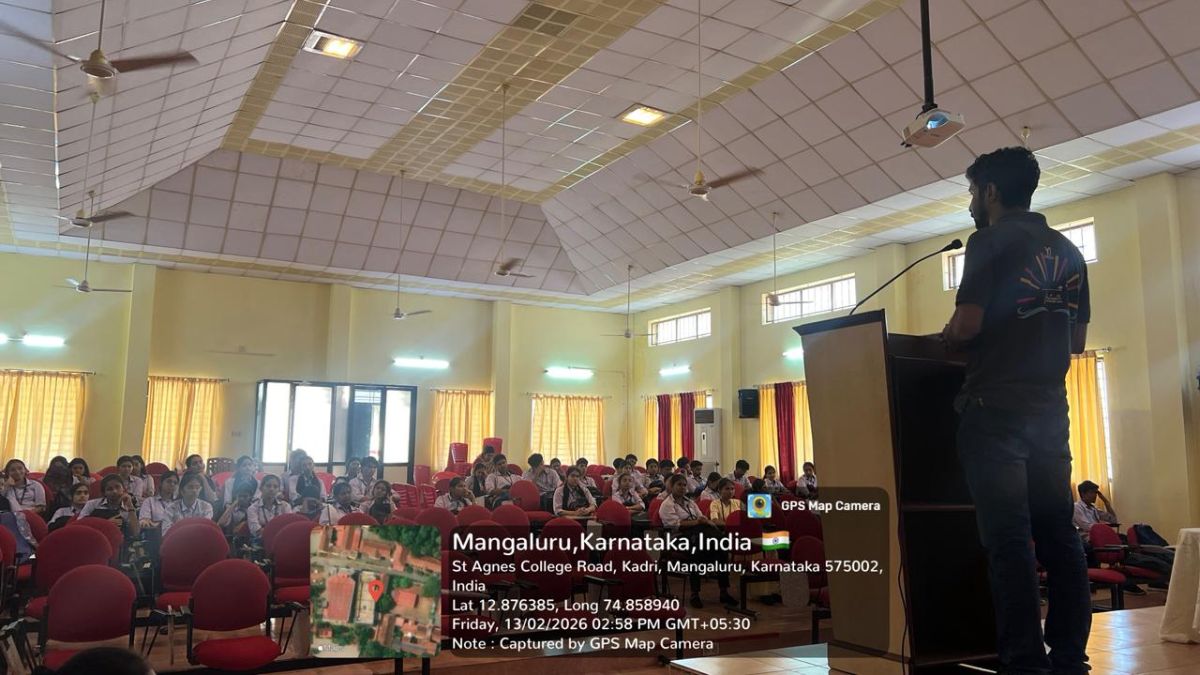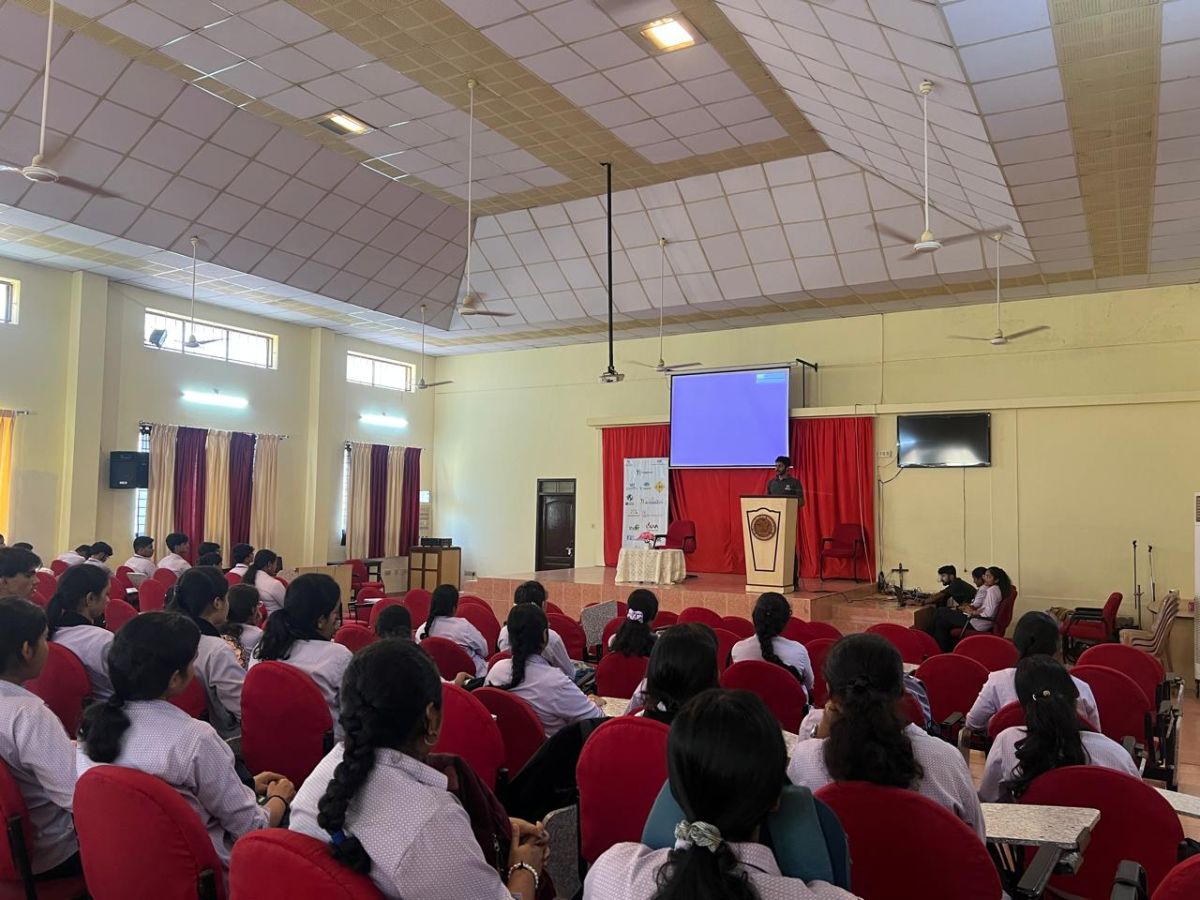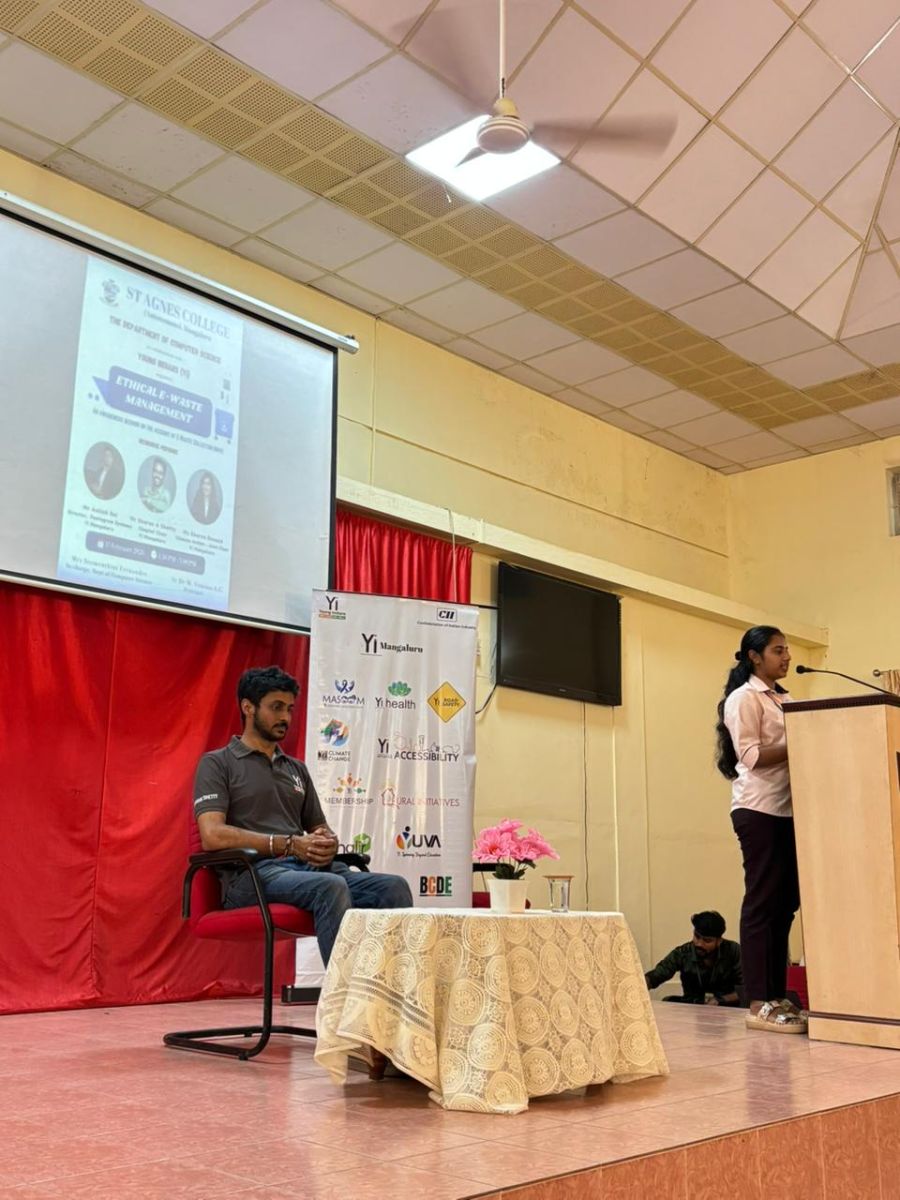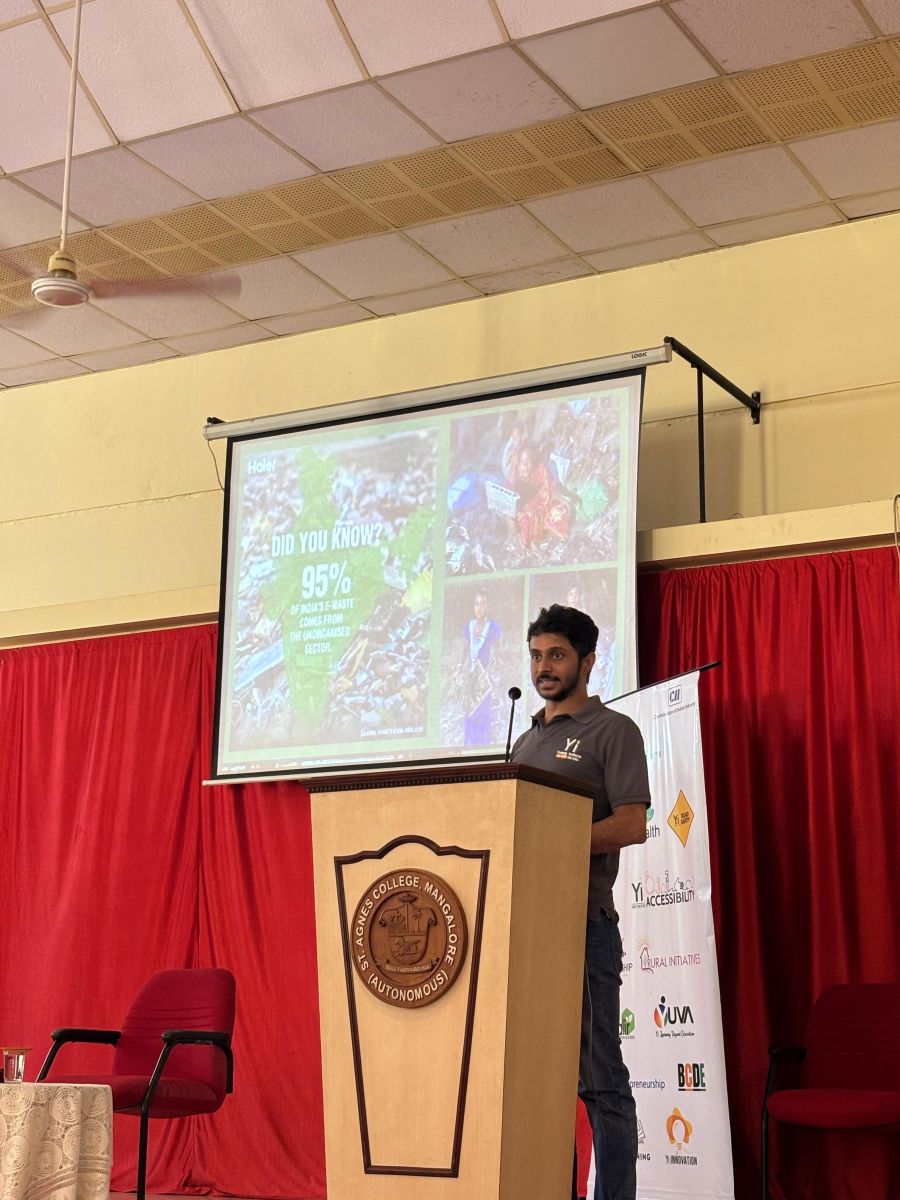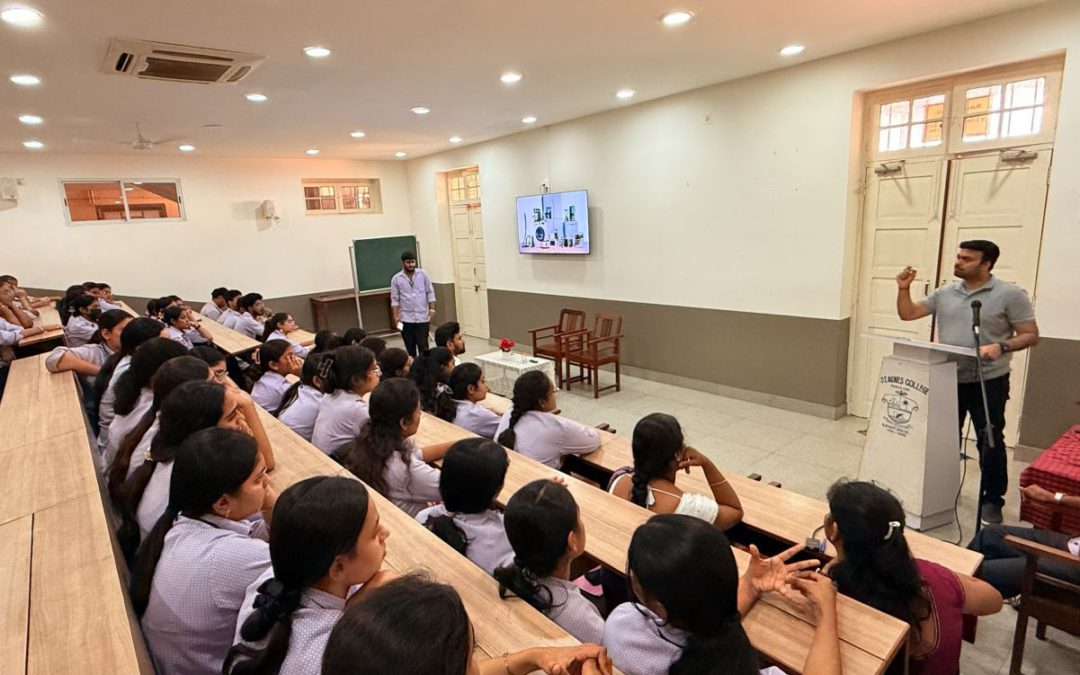
The session was graced by distinguished resource persons: Ms. Sharon Dsouza, Climate Action – Joint Chair, Yi Mangaluru, Mr. Sharan A. Shetty, Chapter Chair, Yi Mangaluru, Mr. Ashish Rai, Innovation Chair, Yi Mangaluru.
The speakers introduced students to the concept of electronic waste, explaining how modern manufacturing often follows a “design for the dump” approach, resulting in the rapid disposal of electronic devices once they become obsolete or unwanted. The growing concern of e-waste generation in India was highlighted, with projections estimating that the country’s e-waste volume could reach 18,51,337 metric tons by 2025. Students were made aware that discarded electronics still possess significant value due to reusable components and the presence of precious and heavy metals.
The resource persons elaborated on the e-waste recycling process, including collection, disassembly, segregation, and scientific processing of discarded materials. They emphasized the environmental and health risks associated with improper disposal, particularly how such hazards disproportionately affect economically vulnerable communities. The discussion covered the adverse impacts of e-waste on air, water, land, and public health, enabling students to understand the broader ecological implications.
The session also provided insights into the E-Waste (Management) Rules, 2016 and its 2022 amendment, along with the concept of Extended Producer Responsibility (EPR). The regulatory role of the Central Pollution Control Board (CPCB) in monitoring and implementing e-waste management practices was briefly explained.
The talk concluded by highlighting the environmental and economic benefits of recycling and reinforcing the message that every individual holds responsibility for making informed and ethical choices regarding electronic consumption and disposal. Students were encouraged to be accountable for their own waste and actively contribute to sustainable practices.
Overall, the session served as a concise yet impactful initiative to raise awareness and foster environmentally responsible behavior among students, aligning with the broader goals of sustainability and climate action.