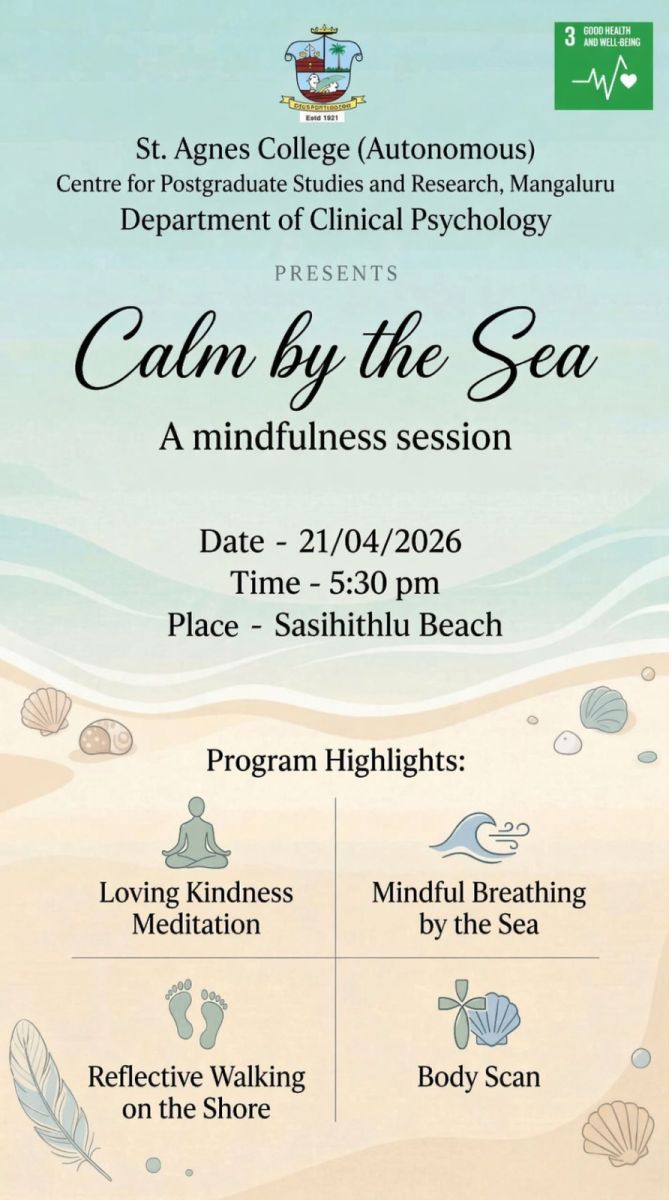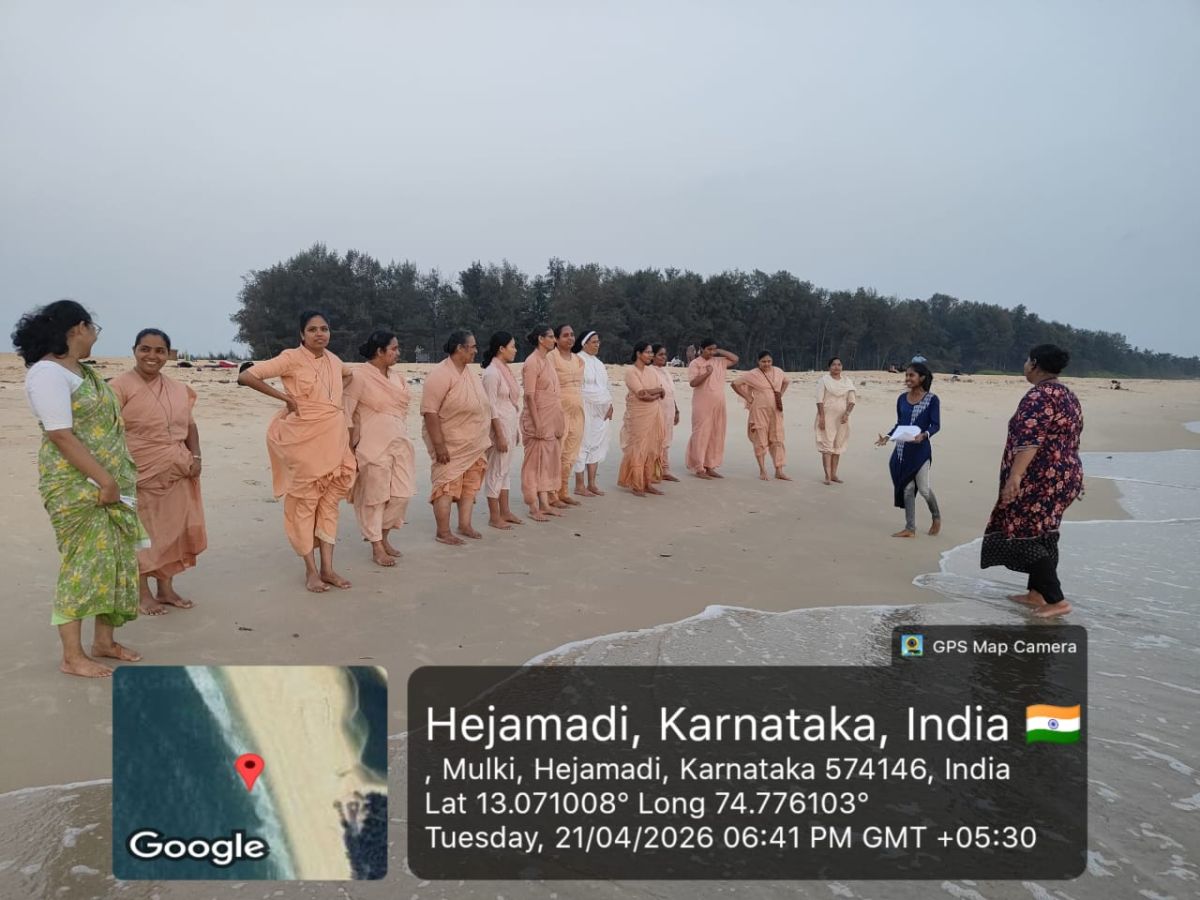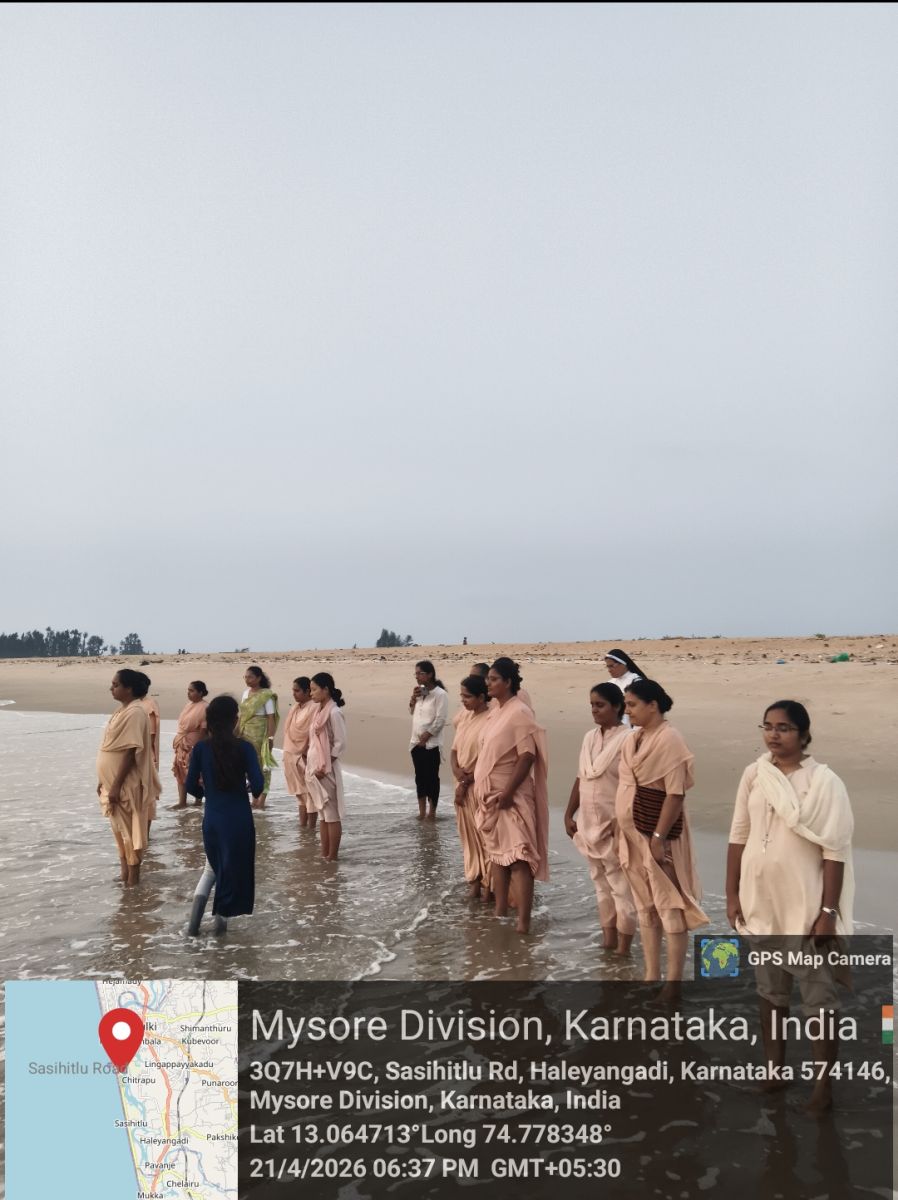
The session commenced with a brief icebreaker activity to build comfort and engagement among the participants. This was followed by an introduction to the concept of mindfulness, along with a simple explanation of its neurological basis, highlighting how mindful practices can strengthen neural connections between the prefrontal cortex and the limbic system (particularly the amygdala), thereby supporting better emotional regulation.
A series of guided mindfulness exercises followed this. A loving-kindness meditation was conducted to cultivate feelings of compassion and warmth. Participants then engaged in a beach-based sensory awareness activity inspired by the Panchabhootha (five elements) model. They were guided to mindfully connect with each element: experiencing heat through the warmth of the sand (fire), sensing air through the movement of the wind, engaging with water by allowing the waves to touch their feet or holding water in their hands, connecting with earth by walking barefoot on the sand, and becoming aware of space (ether) by observing the vastness of the sky and noticing the openness within and around their bodies.
Participants were given 5–10 minutes to fully immerse themselves in these experiences, encouraging them to pause, observe, and savor the present moment through all five elements. Indications and contraindications of each mindfulness exercise were briefly discussed to ensure safe and appropriate practice.
The session concluded with a reflection segment, where participants shared their experiences and insights. Overall, the program provided a meaningful and calming experience, helping participants connect with themselves and their surroundings through mindful awareness. The session was facilitated by Ruth, Manisha, and Priyanka, first-year MSc Clinical Psychology students.