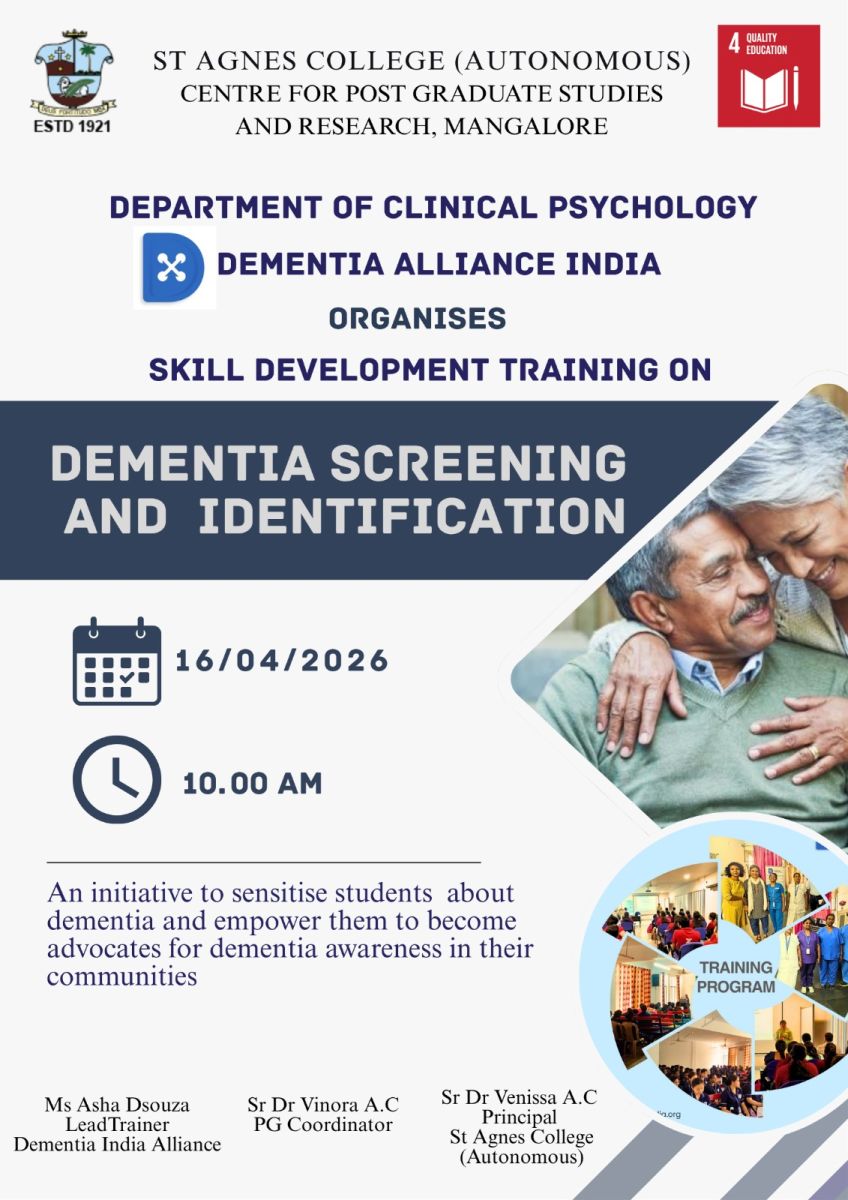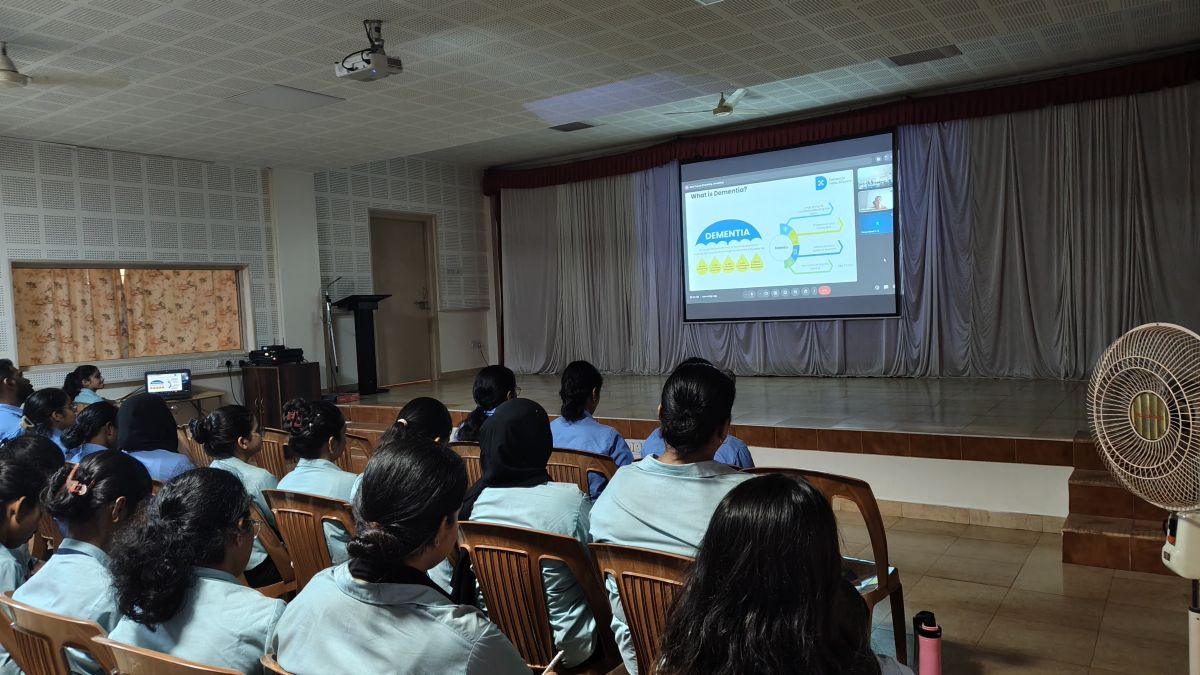
The training commenced with a detailed introduction to dementia, focusing on its definition and various types, along with a clear distinction between normal ageing processes and pathological cognitive decline. The session highlighted commonly observed symptoms such as memory impairment, difficulties in communication, and noticeable changes in behaviour and personality. Special emphasis was placed on the increasing prevalence of dementia and the crucial role of early identification in enhancing the quality of life of affected individuals and improving care outcomes.A significant component of the training involved developing an understanding of the process of dementia screening. The resource person explained a range of basic screening techniques and tools that are commonly used to identify early signs of cognitive impairment. Students were also introduced to practical approaches for observing and assessing individuals, both in clinical environments and within community settings. Role plays, case examples and real-life scenarios were presented and discussed in order to deepen understanding and facilitate the application of these concepts in real-world contexts. The importance of approaching individuals with empathy, patience, and effective communication was strongly emphasised, especially while working with the individuals with dementia.
The training concluded by reinforcing the significance of early detection, increased awareness, and professional responsibility in addressing dementia. Overall, the programme provided valuable knowledge and practical insights, equipping students with foundational skills necessary for dementia screening and identification, while also encouraging them to take on the role of advocates for dementia awareness within their communities